The Importance of Meibomian Gland Expression to Aid Diagnosis of Meibomian Gland Dysfunction
Meibomian gland expression plays an important role not only in treatment, but also in diagnosis.
Your meibomian glands sit along the edges of your eyelids and produce an oily substance (called meibum) that prevents your tears from evaporating too quickly. When these glands become blocked or unhealthy, it can lead to dry, irritated eyes.
During your appointment, your clinician will gently press on the eyelids to assess:
- Meibum quality – Is the oil clear and healthy, or thick and cloudy?
- Meibum expressibility – How easily does the oil flow from the glands?
If the oil is difficult to express or appears poor in quality, this can indicate meibomian gland dysfunction (MGD) — a common cause of dry eye symptoms.
This simple assessment helps guide the most effective treatment plan for you.
How Meibomian Gland Expression Helps to Improve Gland Function
When glands are blocked, the oil inside becomes thick and stagnant. This prevents healthy tear production and can worsen symptoms over time.
Meibomian gland expression helps by:
Unblocking the Glands
and clearing built-up oil.
Removing Stagnant Meibum
that may be inflamed or unhealthy.
Encouraging Fresh, Healthy Oil Production
Improving Tear Stability
reducing dryness and irritation.
Regular treatment, combined with good home care, can make a significant difference in managing symptoms.
Many patients notice their eyes feel:
Less gritty
Less red
More comfortable throughout the day
What Happens if Meibomian Gland Dysfunction is Left Untreated?
Without treatment, meibomian gland dysfunction can gradually worsen.
Blocked glands can lead to:

Ongoing Irritation and Dryness

Red, Inflamed Eyelids

Crusting Along the Lash Line

Fluctuating or Blurred Vision
Early treatment helps protect your glands and maintain long-term eye comfort.
Over time, stagnation within the glands may result in:

Reduced gland function

Permanent gland loss (atrophy)

More severe and persistent dry eye symptoms
What Are the Signs That Gland Expression is Needed?
During your assessment, your clinician will check how easily your glands can be expressed.
If more pressure than normal is required, or the oil appears thick or blocked, manual gland expression is usually recommended.
You may benefit from meibomian gland expression if you experience:
Dry, gritty, or sore eyes
Burning or stinging sensations
Red or inflamed eyelids
Crusting or debris around the lashes
Symptoms that keep returning despite home care
What Needs to Be Done Before Having Gland Expression?
To make the treatment more effective and comfortable, preparation is important.
Before expression, your clinician may:
Warm the Eyelids
Heat is applied to soften the oil inside the glands, making it easier to express.
Perform Lid Cleaning or Debridement
If the gland openings are blocked (sometimes described as “capped”), your clinician may gently clean the eyelid margins to:
- Remove debris
- Open the gland entrances
- Allow smoother expression
This preparation helps ensure the best possible outcome from your treatment.
Why We Prefer Manual Gland Expression to Automated Devices
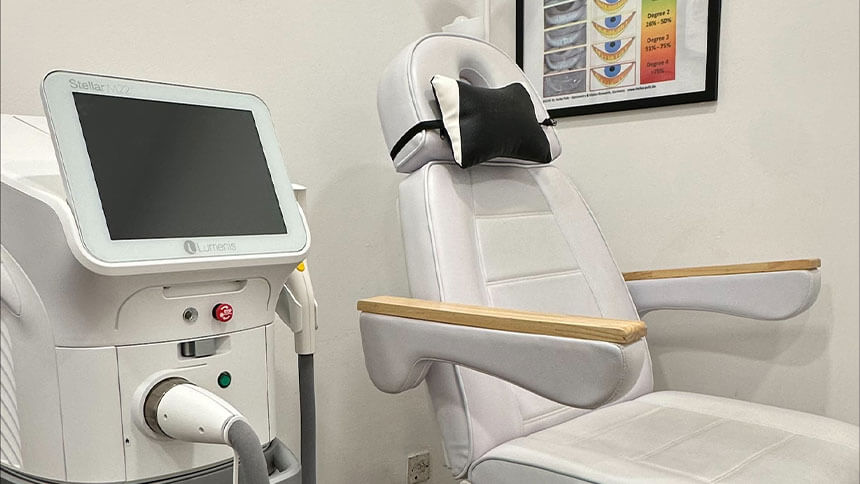
While automated treatments such as LipiFlow Thermal Pulsation System can be helpful in some cases, we often recommend manual meibomian gland expression performed by an experienced clinician. This is because manual expression allows for a far more personalised and controlled approach.
In many cases, this hands-on approach leads to more effective and longer-lasting relief, particularly for patients with moderate to severe meibomian gland dysfunction.

Tailored to Your Individual Glands
Every patient’s glands behave differently. With manual expression, your clinician can:
- Adjust the pressure applied to each eyelid
- Focus on specific blocked glands
- Respond in real time to how your glands are functioning
Automated devices use a standardised setting, which may not suit every patient.
Better Assessment During Treatment
Manual expression allows your clinician to continuously assess:
- Meibum quality (how healthy the oil is)
- Meibum expressibility (how easily it flows)
This provides valuable insight into how your condition is responding and whether further treatment is needed.

More Precise and Targeted Results
With manual techniques, your clinician can:
- Target stubborn or severely blocked glands
- Gradually clear thickened or stagnant oil
- Ensure a more thorough expression across the eyelid
This level of precision is difficult to achieve with automated systems.

Greater Comfort and Flexibility
Manual treatment can be adjusted instantly to your comfort level. If an area is more sensitive, your clinician can modify the technique accordingly.
Part of a Comprehensive Treatment Approach
At the Dry Eye Centre, manual gland expression is usually combined with:
- Eyelid warming
- Lid cleaning or debridement
- Personalised home care advice
This ensures you receive a complete, tailored treatment plan rather than a one-size-fits-all solution.
Meibomian Gland Expression FAQs
The procedure itself is relatively quick, typically taking a few minutes per eye, although your full appointment will be longer to allow for assessment and preparation.
Some patients notice improvement within a few days, while for others it may take a few weeks. Results often improve further when combined with consistent home care.
Most patients find the treatment slightly uncomfortable rather than painful. You may feel gentle pressure on the eyelids, but this is usually very tolerable and brief.
Meibomian gland expression is performed to:
- Improve meibum quality
- Restore meibum expressibility
- Relieve dry eye symptoms
- Prevent long-term gland damage
It is a key part of managing meibomian gland dysfunction effectively.
The procedure itself is relatively quick, typically taking a few minutes per eye, although your full appointment will be longer to allow for assessment and preparation.
Some patients notice improvement within a few days, while for others it may take a few weeks. Results often improve further when combined with consistent home care.
Most patients find the treatment slightly uncomfortable rather than painful. You may feel gentle pressure on the eyelids, but this is usually very tolerable and brief.
Meibomian gland expression is performed to:
- Improve meibum quality
- Restore meibum expressibility
- Relieve dry eye symptoms
- Prevent long-term gland damage
It is a key part of managing meibomian gland dysfunction effectively.